Winter can do real damage to a roof in Northwest Indiana. Snow sits for days. Ice builds along the edges. Wind lifts shingles. Then spring rain finds every weak spot. Many homeowners do not spot the trouble until a stain shows up on the ceiling or water starts to drip.
This article explains the signs you need roof repair after winter and what each sign can mean for your home. You will learn what to look for outside, what to watch for inside, and when it is time to call a local crew. Kornacki Roofing and Contracting serves Northwest Indiana with roof repair, storm damage repair, gutters, and FREE inspections, so this is the kind of damage their team sees every year.
Small roof problems rarely stay small after winter
A roof takes a beating through an Indiana winter. Snow adds weight. Ice pushes water back under the shingles. Cold nights and sunny days keep materials expanding and shrinking. That cycle can open small gaps that were not there in the fall. A roof can look fine from the driveway and still need repair.
Missing shingles after wind and ice
A missing shingle is one of the clearest signs you need roof repair. Wind can lift an older shingle and break the seal. Ice can weaken the edge. Then the next storm tears it off.
That bare spot leaves the roof deck exposed. Water gets in fast once that happens. A simple repair at this stage often saves a much larger bill later.
Cracked, curled, or loose shingles
Shingles should lie flat and hold tight. If they curl at the corners or crack across the surface, winter stress has likely done some damage. Older roofs show this first, but newer roofs can have the same problem after a rough season.
Loose shingles do not stay loose for long. Spring storms can rip them off in one strong gust. That makes roof repair Northwest Indiana homeowners put off in March feel much more urgent in April.
Granules in the gutters
Take a look inside your gutters or at the base of your downspouts. Do you see a gritty black material that looks like coarse sand. Those are shingle granules.
Granules protect the shingle surface. Once they wash off, the shingle wears down faster. A few granules are normal on a new roof. Heavy buildup is a warning sign.
Roof leaks often show up inside the home first
Many people expect roof damage to be obvious from the outside. That is not always how it happens.Often, water moves sideways after sneaking beneath shingles or flashing. A mark on the ceiling might sit far from where rain first enters. Indoor signs carry weight equal to what stands outside. Distance misleads – what appears gap.small indoors could trace back to a distant
Ceiling stains that were not there last month
A mark in shades of yellow or brown across the ceiling often points to water entering from above. Beginning quietly as a pale ring, it tends to spread following every rainfall. Some stains show up near a vent pipe. Some appear near a chimney. Others show up in the middle of a room and leave homeowners confused.
A stain does not always mean a full roof replacement. It does mean you need a close inspection. Water never improves on its own.
Damp attic air and wet insulation
Your attic can tell you a lot about roof health. If the air feels damp or you notice insulation that looks matted down, moisture has likely found its way in. You may see dark spots on wood or smell a stale odor.
That trapped moisture can affect more than the roof. It can hurt insulation performance and lead to mold growth. Quick roof leak repair helps stop the water at its source.
Drips during rain or after snow melt
A ceiling drip is not the first sign. It is the late sign. At that point, water has already moved through several layers of the house. That is why a drip during rain or after a quick thaw should move to the top of your list.
This is one reason many Northwest Indiana homeowners call for service as winter ends. The roof holds on through the cold months, then spring exposes what winter left behind.
Flashing and roof edges take a lot of abuse in cold weather
Most roof leaks do not start in the middle of an open shingle field. They start at joints, seams, and edges. These are the spots that move the most and collect the most water. A winter full of ice and wind puts extra stress on every one of them.
Bent or lifted flashing
Flashing is really important for the roof. It seals the roof around things like chimneys and vents and skylights and valleys. If the metal that is used for flashing lifts up or bends or pulls away from the roof then water can get into the home through that opening. This is because the flashing is not doing its job of keeping the water out when the metal’s not in place correctly. The roof, around chimneys and vents and skylights and valleys is sealed by the flashing.
This type of problem often needs a trained eye. Kornacki Roofing and Contracting highlights roof repair and storm damage repair as core services, and this kind of detail work is part of that job.
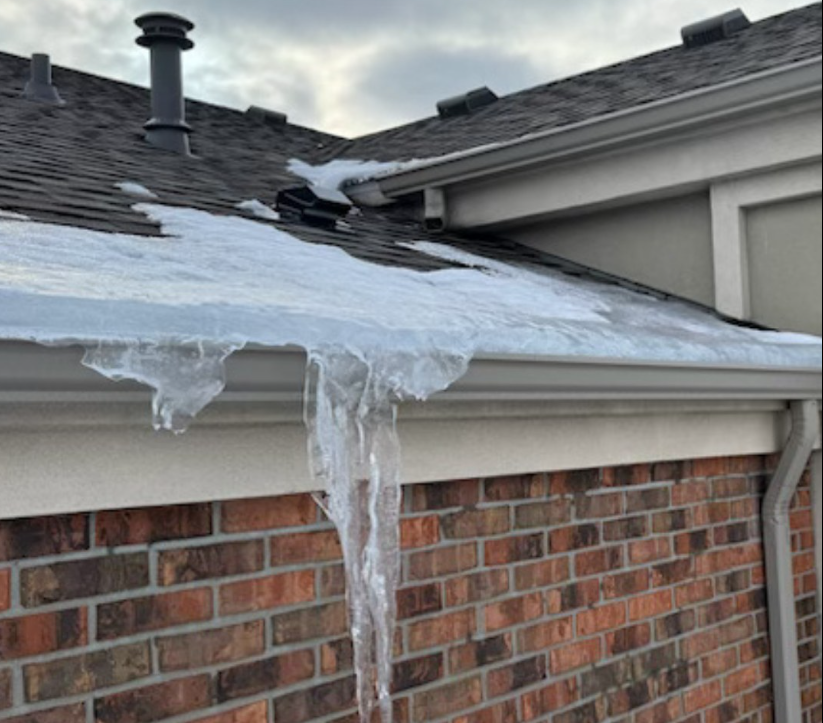
Ice dam marks near the eaves
As temperatures rise, melted snow moves downward across rooftops. Near the edges, chilling air turns the runoff into ice buildup. Behind this dam, pooling water gathers unseen. Slowly, dampness pushes under shingles, creeping inward. Come March or April, evidence shows – stains on undersides, blistered wall coatings, dark traces beside baseboards.
Long after frost vanishes, consequences remain visible. Despite thawing completely, traces of disruption endure. A roof can still need repair weeks after the last hard freeze.
Soft spots near the roof edge
A soft section near the edge of the roof is bad news. It can point to wet decking under the shingles. That often starts with poor drainage, ice dams, or long-term seepage. A soft spot should never wait for another season.
Gutters matter more than most homeowners think
Your roof and gutter system work as one. If the gutters fail, water spills back toward the roofline and foundation. Winter is hard on gutters in this part of Indiana. Snow loads them down. Ice pulls them away from the fascia. Debris blocks flow right when meltwater needs a clear path.
Gutters that sag or pull away
A sagging gutter is more than a trim issue. It changes the way water moves off the roof. Water may pool near the edge or spill over in the wrong place. That can soak fascia boards and feed hidden roof damage.
Gutters fall under Kornacki Roofing and Contracting’s scope and are not separated from roofing tasks. Drainage issues are addressed at the source rather than through partial fixes. Homeowners benefit when both elements are managed together by one team.
Water spills over under normal rainfall conditions
If rainwater spills past the gutter’s edge even during light spring showers, it signals a problem. When blockages exist, water finds its way elsewhere. Misalignment may also be a factor. Water can flow back toward the home when supports fail or angles are off.
You may start by cleaning the gutters. If the overflow keeps happening, it is smart to have the roof edge and gutter line checked together.
Water marks on siding or fascia
Dark streaks, peeling paint, and water marks near the roofline often point to drainage trouble. These marks can show up long before an interior leak appears. A homeowner who spots them early has a better shot at a simple fix.
Age still matters after a hard winter
Not every roof problem starts in one storm. Some roofs just reach a point where winter pushes them past their limit. An older roof has less flexibility, weaker seals, and more wear at key points. That means freeze and thaw cycles hit it harder.
Repairs start showing up in several places
One repair is normal over time. Trouble in several areas at once is different. If you see a loose shingle in one spot, flashing wear in another, and granule loss across a wide section, the roof is telling you it needs attention.
This does not always mean replacement. It does mean a pro should inspect the full system and explain what makes sense next.
Your heating and cooling costs feel off
A damaged roof is a problem because it can mess with the attic ventilation and the insulation. This means that the indoor temperatures of your home will start to go down a lot more than they normally do. The roof damage affects the ventilation and insulation performance so you will notice that the indoor temperatures are not stable like they used to be.Your furnace or AC runs longer. The bill climbs. That kind of shift is easy to miss until it repeats for a few months.
You want a clear answer before storm season
Many homeowners wait and watch. That feels fine until spring storms arrive. A local inspection gives you real answers before wind and rain make the damage worse. Kornacki Roofing and Contracting offers FREE inspections, and the company leans on more than a decade in the construction community plus CertainTeed Select ShingleMaster and Storm Solutions Specialist credentials. That gives homeowners a trusted local option when the roof starts raising questions.
Schedule roof repair before spring weather opens the damage wider
A roof may require attention even when problems seem minor. One absent shingle, moisture inside the attic space, corrosion along downspouts, or debris collected in troughs often follows cold-season stress. Early detection helps preserve structural layers beneath the surface. These quiet warnings support long-term stability if noticed soon enough.
Kornacki Roofing and Contracting is locally and family-owned in Valparaiso and serves homeowners across Northwest Indiana with roof repair, storm damage repair, gutters, and FREE inspections. If your roof does not look right after winter, now is a good time to get it checked and find out what your home needs.